
In 2010, Dr. Eddie Glaude, Jr. wrote an article that continues to circulate today. It began, “The Black Church, as we’ve known it or imagined it, is dead.” While he notes that many continue to attend churches, he argues that the Black Church is no longer the center of Black life. He goes on to trouble our understandings of the Black Church. The Black Church has always been a complicated institution with churches ranging from more radical and prophetic to those that are more conservative and aligned with white evangelicalism. He notes that we can’t forget about the more conservative churches. He also states that there are other institutions, secular institutions, that have developed to support Black communities in a number of ways. Lastly, he highlights how a focus on a past liberative Black Church holds us back from imagining ways we can move forward. In concluding, Dr. Glaude says it’s time for the Black Church to decide who they want to be and invites the church to find its “prophetic energies” again.
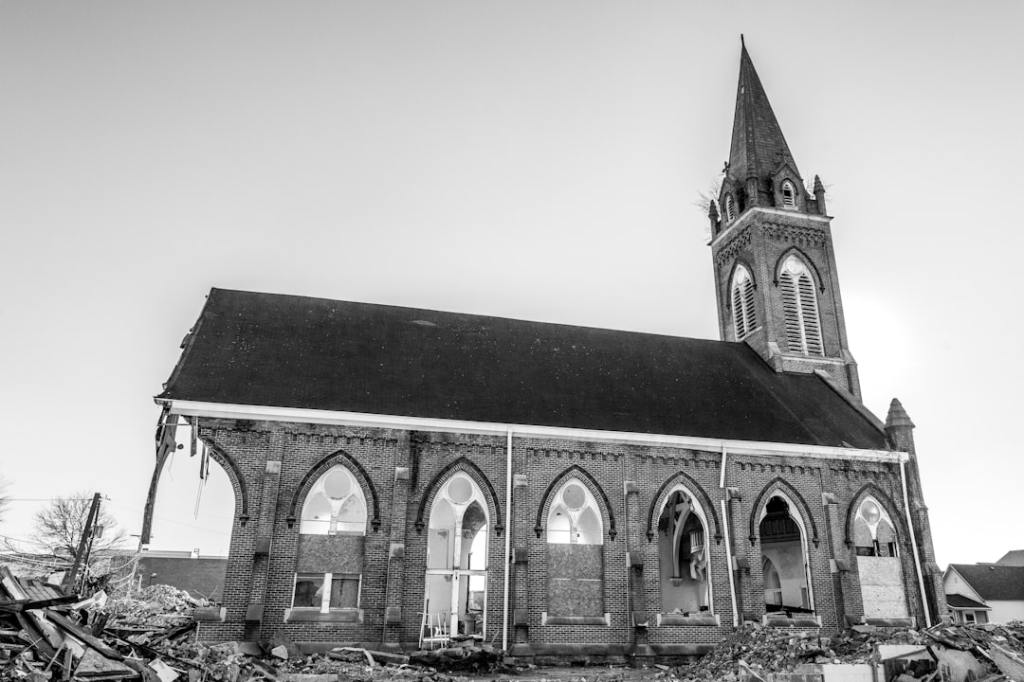
While Dr. Glaude claimed that the Black Church is dead, sixteen years later I want to offer that it’s on life support. The Black Church is dead, but we struggle to let it die. When critiques are offered of the Black Church, some people are quick to defend it. “It’s not the church. It’s the people,” they say. “You need to let go of that spirit of church hurt.” As younger generations leave churches altogether they respond: “We should be figuring out how to get young people in the church.” They have sessions where they talk about how we can grow our denominations and congregations. But when is it time to let dead things lie?
As a womanist minister and the oldest of the Gen Zers, I have no intention of signing papers that allow the Black Church to remain on life support. That’s not to say that we need to close all the churches. I still hope to be ordained and plan to continue to preach in the Black Church, but I think that we need to shift our focus. The arguments that Dr. Glaude made remain true.
The Black Church continues to be a complicated institution. There are churches that are committed to doing good justice-filled work. Every weekend, I listen to the sermons preached at the Riverside Church in DC and The Gathering A Womanist Church in Dallas, TX. And yet when I log onto social media, I’m inundated by folks espousing white evangelical and Christian fundamentalist nationalist theologies. The lines at churches that preach these messages are longer than they should be. It’s impossible to forget these churches because they dominate the mainstream media today.
When it comes to the argument that the Black Church has always been a place of liberation, we forget that there is an asterisk next to liberation. It has always been a liberative place for cisgender straight men. It was a place where they could lead, but it was also a place where they could oppress. The challenges faced by those like Jarena Lee and Julia Foote let us know that the Black Church has not always been a freeing space for Black women. The public sermons and proclamations of Black pastors during the HIV/AIDS pandemic and the subtle and more overt sabotage of LGBTQIA+ pastors and preachers let us know that the Black Church has not always been a freeing place for queer folk. There are a number of other populations that have been harmed by the Black Church, such as Black single mothers and poor Black women. And all of this continues today. Black women and queer folk struggle to be ordained. While there are more Black women pastors, they are still outnumbered by men and continue to face sexism and additional challenges. Dr. Eboni Marshall Turman’s continued struggle with Abyssinian Baptist Church in New York concerning gender discrimination in their pastoral search demonstrates this.
The Black Church is dead, and we should let dead things lie. However, church is not dead. In his essay, Dr. Glaude talks about the ways that secular institutions now support Black communities. As we allow the Black Church to die, I think that we should really lean into these secular institutions where Black people can experience church and find a freedom that goes beyond what’s possible for them in the Black Church. One such space, as I argue in an essay that I’m currently pitching a few places, is the pole studio.
In that piece and in my broader PhD research I talk about how the pole studio becomes a space where Black women and femmes can experience church. Pole dancers often name it as a sacred space where conversions happen. It is a space where they find community. It is a space where they can be free in their bodies and sexualities. It is a space where they can encounter the Spirit in new ways and find the divine within themselves.
As millennials and Gen Zers leave the Black Church, I argue that they’re recreating church in these secular institutions. We can cultivate church at the pole studio, with the running club, at the coffee shop, at the yoga studio, with the book club, anywhere where two or three are gathered.
So to my fellow ministers, I say that it’s time to let the Black Church die, for real this time. Let’s take it off life support and lean into the ways that we can cultivate the sacred in the secular institutions that are drawing more young people than the church. It’s time to reimagine church outside of the Black Church institution.


