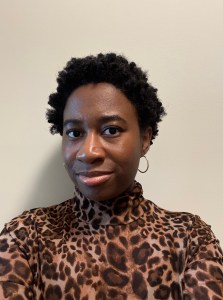
“I am not my hair. I am not this skin. I am not your expectations, no. I am not my hair. I am not my skin. I am a song that lives within.” ~ India Arie
In the United States, Black women’s hair is both personal and political. In New Growth: The Art and Texture of Black Hair, scholar Jasmine Nichole Cobb writes about how textured Black hair has been used to symbolize freedom. The evolution of Black hairstyles and perceptions around Black textured hair tell the story of a people. They tell the story of a people who have fought to be free from the captivity of slavery. They tell the story of a people who have struggled to be recognized as citizens in a nation they were brought to by force but worked to claim as their own. They tell the story of a people who assert that “I’m Black, and I’m proud” in a society that would project whiteness as the model and the ideal. They tell the story of a people who resist. The way we choose to style our hair and the way it is presented in art, the media, and in other arenas matters.
When I read New Growth in my Race, Racism, and Democracy class in the first year of my PhD program, I had long, straight, relaxed hair that reached down my back. It was the hairstyle that I’d been wearing since middle school and one I took care to maintain. As a first year PhD student, I would drive an hour to my grandma’s beautician every other week to get my hair refreshed. Every six to eight weeks, I would get a fresh perm (relaxer). I had to be presentable on campus, and that included my hair.

Growing up as a Black woman in the South, appearances are everything, especially when you’re around “mixed company.” Whenever you leave the house, you have to carry yourself a certain way. You represent your family, your school, and the many other people and places that have shaped you. Your hair must be well-kept and not nappy. When your roots get too thick, you have to do something about them. That something usually includes straightening them. But why is that?
As I have more of my PhD program behind me than ahead of me, I’ve been reflecting on my own hair and what it represents. As much as I hate to admit it, growing up in spaces where I was often the only Black girl shaped how I perceived myself. I could dress like my little white friends, in my Miss Me jeans and converse. I could sing like my little white friends, joining them in songs like Taylor Swift’s “Teardrops On My Guitar” on the playground. I could play like my little white friends, going to playdates and sleepovers at their houses. However, my hair prevented me from fitting in fully. When I was old enough to get my relaxed hair styled straight, I could do everything they did with their hair with my own. (Everything except go swimming or run in the rain.)
But I’m not that little girl anymore. I am learning to love every part of myself, including my hair. I want to care for my body. That includes avoiding hair products that could be potentially harmful. I’m unpacking the messages that I’ve internalized around appearance, messages that were meant to help me survive in a world that is often hostile to Black life in very visible ways as well as more subtle ways. I am coming into my own as a womanist minister and a Black feminist anthropologist and a scholar who wants to practice what she preaches; I want to model the self-love that I invite others into.
So, on January 9th of this year (2026), I began my natural hair transition. I cut off the relaxed portion of my hair, and I’m starting fresh with the 4c hair that grows out of my head. I know that this decision is only possible because of the work that has been done to proclaim that Black hair is beautiful, whether it’s straight, curly, or kinky. I am grateful to live in a time where I can wear my natural hair without having to face as much pushback as those who paved the way for me to be able to make a decision like this and not have to fear that it’ll affect my future prospects.
As I move towards the end of my PhD program, apply for jobs, and approach the big 3-0, I am in my season of becoming. I am transforming into the person I will be on the other side of all my years of study and research and writing, and I want my outer appearance to reflect my inner transformation. For me, this journey begins with a hair cut.